
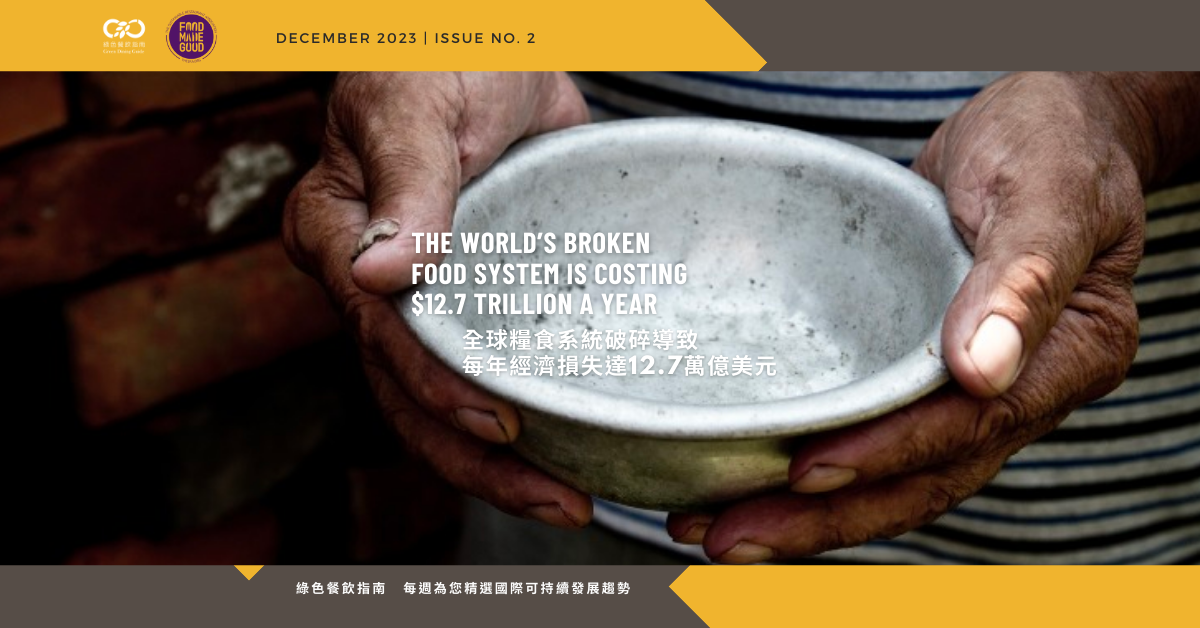
【GDGxSRA電子報 02】全球糧食系統破碎導致每年經濟損失達12.7萬億美元
- 編輯永續部
- 攝影The Sustainable Restaurant Association
根據聯合國糧食及農業組織(FAO)今年的《糧食及農業狀況報告》,全球糧食系統的隱性成本高達12.7萬億美元,約佔全球國內生產總值的10%。這份報告以2020年的購買力平價美元為基準,分析了當前糧食系統中隱含的對健康、社會和環境的成本和影響。
全球糧食系統破碎導致每年經濟損失達12.7萬億美元
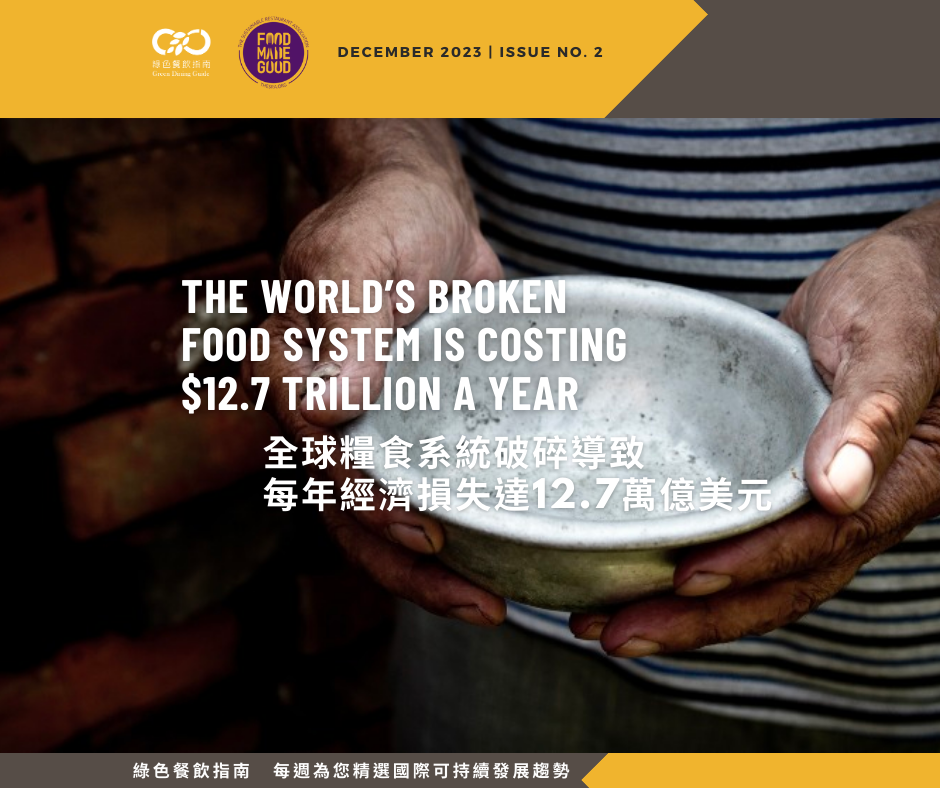
聯合國糧食及農業組織(FAO)今年發表的《糧食及農業狀況報告》指出,全球糧食系統的隱性成本總計高達12.7萬億美元,相當於全球國內生產總值近一成。
該報告以2020年的購買力平價比較不同國家的收入和物價水平,分析現時糧食系統對健康、社會和環境所帶來的成本及影響。
從金錢角度來看,糧食系統對全球健康的影響最大。在FAO計算的隱性成本中,有73%與導致肥胖或糖尿病、心臟病等疾病的飲食習慣有關;其次是對環境的影響,佔隱性成本逾兩成。
大多數高收入國家的國民飲食極不理想。FAO發現,有超過八成的糧食隱性成本與不健康的飲食習慣有關。
現時FAO已著手撰寫明年的報告,將會提供一系列研究案例,協助各國計算有關真實成本。該報告敦促政府及政策制定者利用這些資訊推動農食系統轉型,以應對氣候危機、貧困及糧食安全問題。
授權來源:The Sustainable Restaurant Association
The world’s broken food system is costing $12.7 trillion a year
According to this year’s The State of Food and Agriculture report from the UN Food and Agriculture Organization (FAO), the total hidden costs of the world’s food system add up to $12.7 trillion US dollars – roughly 10% of global GDP.
Using 2020 purchasing power parity dollars – a way of comparing living standards across countries with varying incomes and prices – the report analysed the costs to health, society and the environment embedded in the current food system.
In monetary terms, the biggest impact is on global health. An enormous 73% of all the hidden costs accounted for by the FAO were associated with diets that led to obesity or diseases like diabetes and heart disease. The next biggest financial impact was to the environment, accounting for more than 20% of quantified hidden costs.
Most high-income countries are failing dramatically when it comes to people’s diets. In these countries, the FAO found that over 80% of the hidden costs of food are related to unhealthy diets.
The FAO is already working on next year’s report, which will present a series of case studies designed to help countries implement true-cost accounting. The report urges governments and policymakers to use this information to transform agri-food systems in order to address the climate crisis, poverty and food insecurity.
【小編觀點】
高收入國家的飲食居然普遍不盡理想,從而影響到健康及環境。如果財富的累積,無法創造出更好的身心健康及環境,那麼不斷追求生產總額及個人財富的意義又為何?